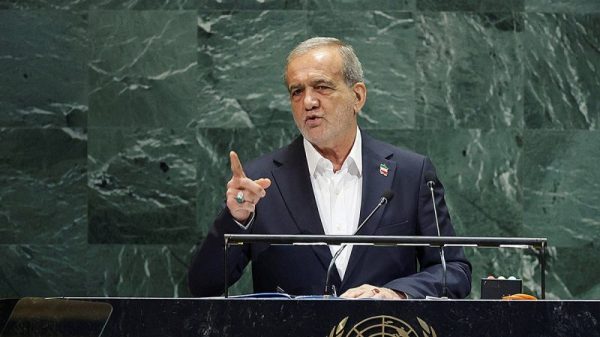






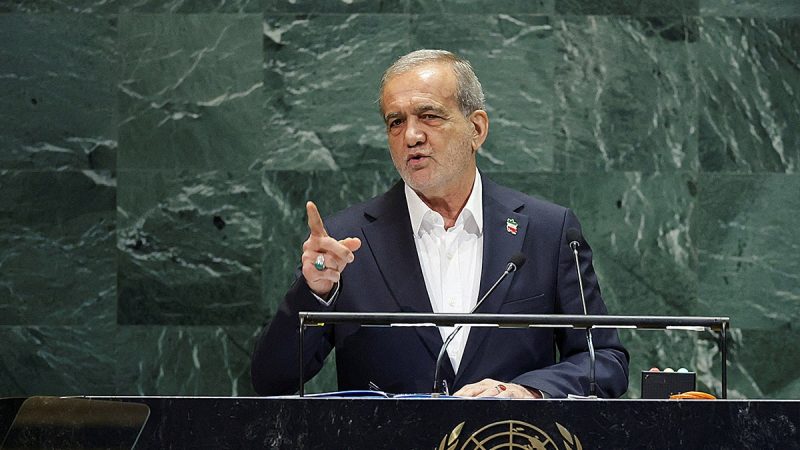
As the United Nations adopted a resolution condemning Iran for its execution spree ‘in the strongest terms,’ a leading dissident group released a report accusing Tehran of putting 2,013 Iranians to death under President Masoud Pezeshkian between Jan. 1 and Dec. 15 of this year.
TheMujahedin-e Khalq (MEK) report says this more than doubles the total of 975 executions that the United Nations Deputy High Commissioner for Human Rights counted in 2024. The U.N. noted that the 2024 figure was the highest recorded since 2015. Thegroup counted a similar total of 1,001 executions in 2024.
According to MEK documents provided to Fox News Digital, a free-falling Iranian currency, nationwide protests, factional power struggles, ‘snapback’ U.N. sanctions and fractures among leaders are stoking the increase in executions. The MEK says that this year’s execution total is the highest recorded since the 1980s.
A State Department spokesperson condemned Iran’s continued abuse of human rights, telling Fox News Digital that, ‘We strongly condemn the Iranian regime’s use of execution as a tool of political repression. For decades, the regime has subjected Iranians to torture, forced confessions, and sham trials, resulting in unlawful executions. Today, innocent civilians are being used as scapegoats for the regime’s military and economic failures.’
The spokesperson continued, ‘The Trump Administration restored the policy of maximum pressure, ending the Biden Administration’s policy of announcing fig-leaf sanctions while handing the regime billions. Since January, we have designated dozens of people and over 180 vessels in Iran’s shadow fleet to deplete the regime’s coffers.’
Behnam Ben Taleblu, the senior director of the Foundation for Defense of Democracies’ Iran Program, said there are more steps needed to be taken by Washington. He told Fox News Digital that the U.S. has ‘been lagging behind’ other Western partners who have responded to Iranian human rights violations with sanctions and other measures, most recently Canada, which sanctioned four individuals after a protest in the Iranian city Mashhad in December.
‘The lack of practical measures to support the Iranian people is a strategic own goal,’ Taleblu said.
Taleblu noted that Iran ‘arrested over 21,000 people’ following the 12-Day War in June, alongside a ‘political repression that is even much more expansive than ever before.’ He said that the Islamic Republic ‘understands how weak it is,’ and any efforts to appear more socially lenient, including regarding hijab laws, are an attempt to ‘retain their oligarchic political position in a post-Khamenei Iran.’
Noting the prior Trump administration’s strong stance on Iran, Taleblu says that ‘it certainly can do better much more cheaply and more cost effectively than it thinks.’ Taleblu said that one ‘simple’ messaging strategy will present itself in March during President Trump’s Nowruz address, when he can ‘give an homage to the most pro-American, the most pro-Israeli population in the heartland of the Muslim Middle East.’
‘The imperative for Washington to support Iranian protesters… stands,’ Taleblu said. ‘But that should be a constant in U.S. foreign policy, given the disposition of the Iranian street, which is almost entirely against the Iranian state. U.S. human rights policy towards Iran should not be limited to merely having social media accounts that are the stenographers for Iran’s decline into failed state status.’
The MEK has urged U.S. policymakers to recognize the Iranian people’s right to resist and overthrow the regime, which they claim is the only means for eliminating the country’s theocracy.
On Dec. 10, the European Parliament marked International Human Rights Day by calling for the world to take action against Iran on account of its execution campaign. Maryam Rajavi, president-elect of the National Council of Resistance of Iran, addressed the parliament with her concerns that Iran is attempting to crush dissent. She urged that ‘all relations with the regime must be conditioned on the halt of executions,’ with members of the Islamic Revolutionary Guard Corps and Ministry of Intelligence placed ‘on the terrorist list.’
Among those sentenced to death is Zahra Tabari, a 67-year-old engineer and mother who the MEK say was given her sentence after a ‘sham 10-minute trial… without her chosen legal representation.’ MEK documents say Tabari was arrested because she held a banner reading ‘Woman, Resistance, Freedom.’
The total number of executions in Iran has doubled since October. At the time, the U.N. Office of the High Commissioner for Human Rights said that Iran was murdering up to nine prisoners each day, which they called an ‘unprecedented execution spree.’ In response, death row prisoners staged a hunger strike.
Iran’s mission to the United Nations did not offer comment on the report.