







Global sustainability strategies are entering a more politically complex phase in 2026 as governments and companies balance immediate economic pressures against long-term climate risks, according to S&P Global’s latest outlook on sustainability trends.
S&P Global said sustainability decision-making in 2026 will be shaped by a growing tension between near-term priorities (energy security, affordability, geopolitical risk) and longer-term realities (climate adaptation, decarbonization, resource constraints).
The result is a world moving away from multilateral coordination toward a patchwork of national and regional responses.
Regulatory fatigue reshapes supply chains, critical minerals take center stage
Trade tensions, protectionist policies, and political fatigue around sustainability regulation are pushing climate and human rights risks in supply chains out of the spotlight.
S&P Global notes that as regulatory momentum slows in some jurisdictions, companies may increasingly need to treat climate exposure as a core risk management issue rather than a compliance exercise.
The European Union (EU) remains a key exception, though its policy direction is evolving. While the bloc has introduced far-reaching disclosure and due diligence rules, it is also simplifying parts of its regulatory framework.
Meanwhile, the EU’s carbon border adjustment mechanism (CBAM), which took full effect on January 1, is expected to add at least US$15 billion in costs to imports from carbon-intensive producers, potentially reshaping global trade flows.
Furthermore, the firm said critical minerals will sit at the center of these dynamics in 2026.
Materials such as copper, lithium, and rare earths underpin electrification, clean energy deployment, and AI infrastructure, making access to them a central feature of trade diplomacy and investment.
China is expected to retain its lead in cleantech manufacturing, reinforcing its role as both a key supplier and a strategic risk for countries pursuing energy transitions.
Energy policy diverges as fossil fuels rebound, renewables expand
Another aspect of fragmentation is most visible in energy policy, where global fossil fuel demand rebounded faster than many policymakers expected after the pandemic and is projected to continue growing modestly.
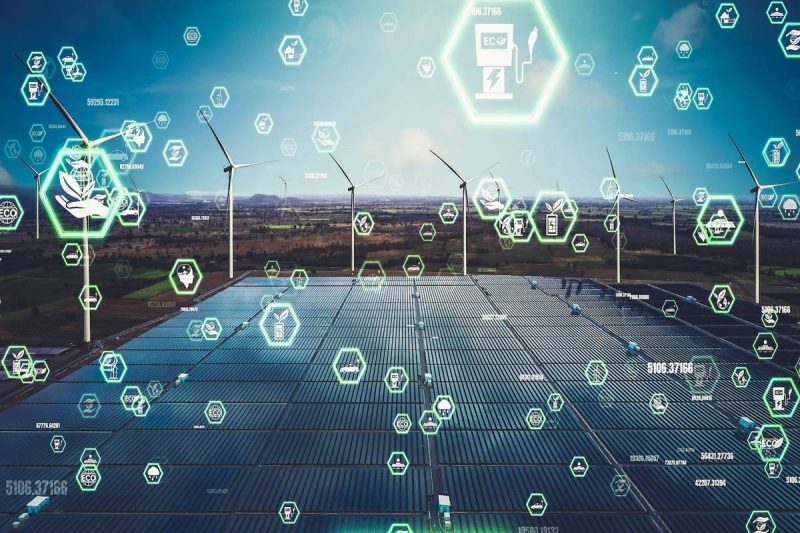
In contrast, renewable energy remains the fastest-growing segment, though from a smaller base. S&P Global Energy estimates that fossil fuel demand will rise by less than 1 percent in 2026 compared with 2025, while solar and wind generation are expected to grow by more than 17 percent.
Similarly, the divergence between the world’s two largest economies is particularly stark. The US has prioritized expanding fossil fuel exports, while China continues to invest heavily across clean energy supply chains such as solar manufacturing and electric vehicles.
The report said that this same divergence leaves many countries navigating trade-offs between supply security and dependence. China continues to maintain a dominant position in clean energy technologies and has demonstrated its willingness to use export controls on strategic materials such as rare earths.
Despite continued growth in renewables, S&P Global expects 2026 to mark the first year-over-year decline in global solar capacity additions, driven largely by a slowdown in China. While overall renewable capacity will still expand, analysts said the period of uninterrupted growth is ending.
At the same time, increasing renewable penetration is pushing wholesale power prices lower in some markets while accelerating demand for battery storage and more flexible power purchase agreements.
AI adds new strain to power systems
Artificial intelligence is adding further strain to energy systems. The rapid expansion of AI-driven data centers is driving electricity demand sharply higher, complicating sustainability targets for both governments and corporations.
S&P Global estimates that data center power consumption could exceed 2,200 terawatt-hours by 2030, roughly equivalent to India’s current electricity use. Grid constraints, rising power prices in some regions, and growing water stress are emerging as political and social flashpoints, particularly in parts of the US.
While major technology companies have made high-profile net-zero commitments, the report’s data shows that sustainability ambition across the data center sector remains uneven.
According to the firm’s 2024 Corporate Sustainability Assessment, 38 percent of assessed companies with data center operations do not have a net-zero target.
Analysts warned that rising AI-related energy demand may lead to increased fossil fuel use in the near term, with some regions delaying planned coal and gas plant retirements to maintain grid reliability.
Climate adaptation gains priority
The implications of rapid energy shifts also mean that climate adaptation and resilience are gaining prominence.
S&P Global said governments and investors increasingly recognize that the world is likely to overshoot the Paris Agreement’s 1.5-degree Celsius warming goal, making adaptation unavoidable.
Global economic losses from natural disasters reached US$320 billion in 2024, according to Munich Re, while United Nations (UN) data suggests the number of natural disasters could rise by 40 percent by 2030 without stronger mitigation.
Therefore, investment in adaptation is emerging as a major opportunity as well as a necessity. Singapore sovereign wealth fund GIC, for instance, estimates that adaptation and resilience investments could total US$9 trillion by 2050. That theme featured prominently at Climate Week NYC in 2025 and at COP30, where governments agreed to triple public adaptation finance by 2035 from 2025 levels.
Taken altogether, S&P Global’s outlook points to a sustainability landscape that is less coordinated but no less consequential.
While global consensus is weakening, pressures from various sectors are forcing governments and companies to make increasingly difficult trade-offs as they chart their paths through 2026.
Securities Disclosure: I, Giann Liguid, hold no direct investment interest in any company mentioned in this article.